
Rehabilitating Condenser Water Risers in a 70-Story Occupied Building — Without Entering a Single Apartment
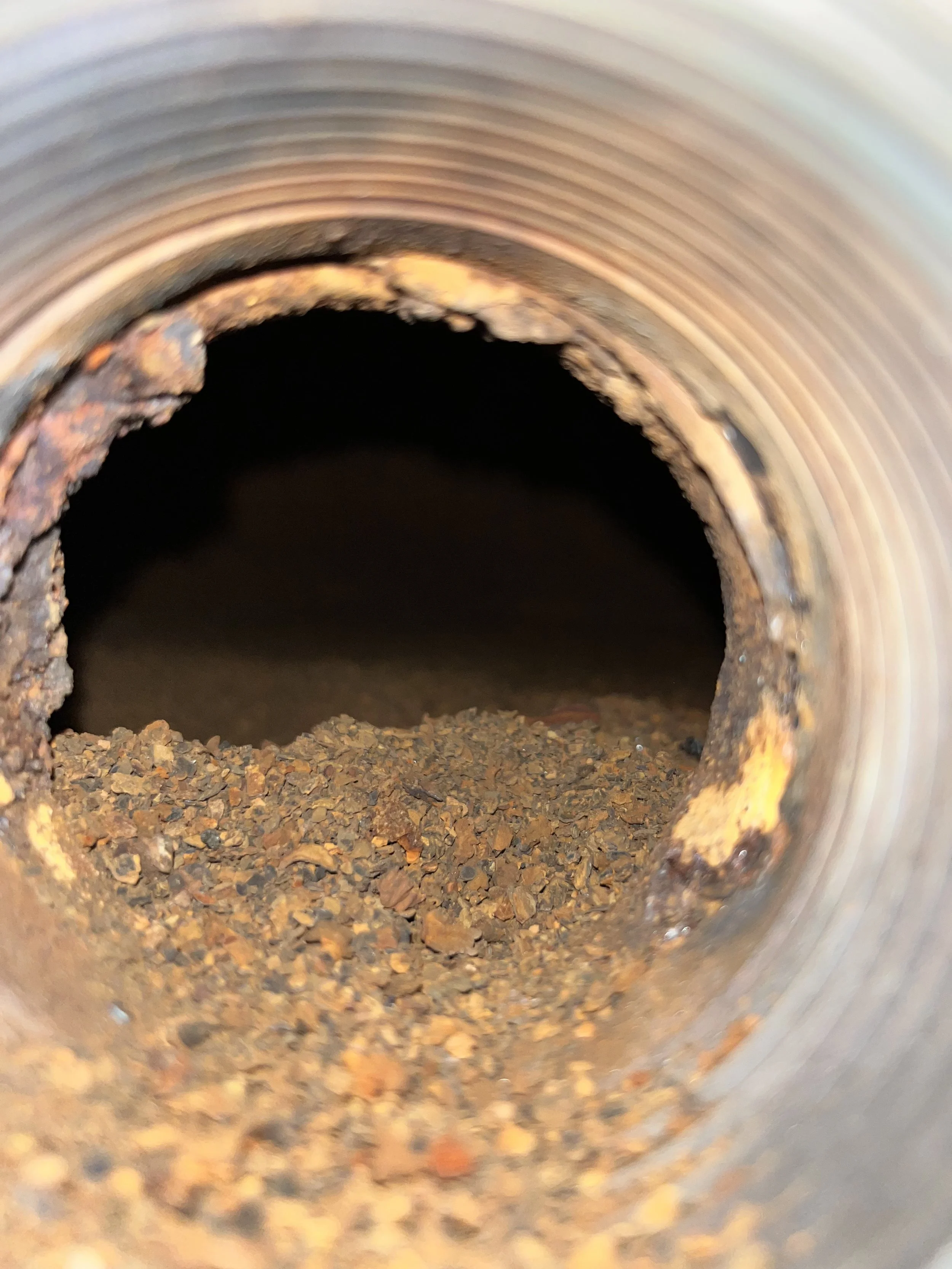
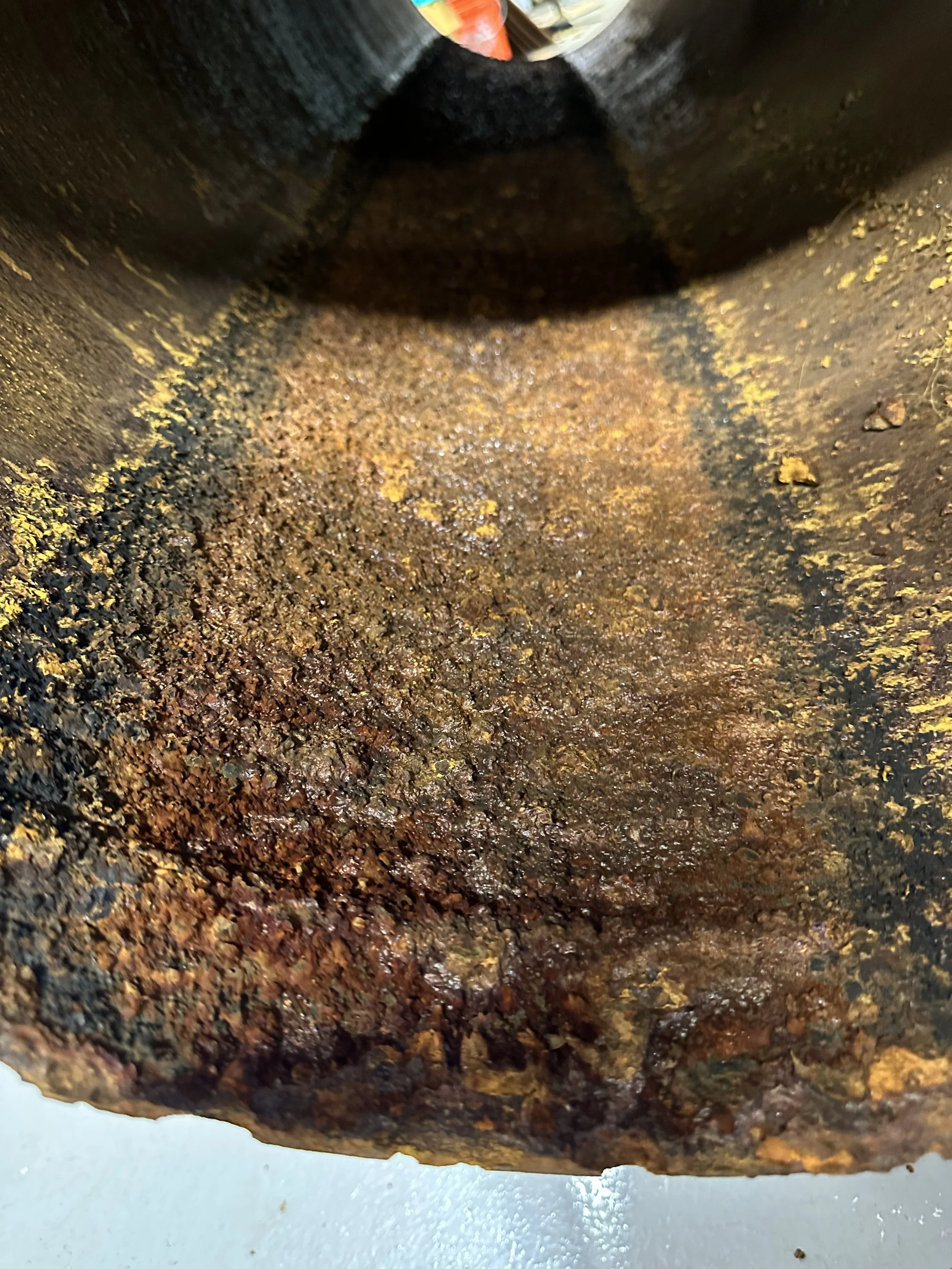
In high-rise buildings, the condenser water system is invisible until it fails. The risers run vertically through the core of the building, buried behind walls, passing through every floor. When those pipes start to corrode, the symptoms show up gradually — sediment collecting in pump strainers, pinhole leaks appearing in mechanical rooms, cooling efficiency slowly declining. By the time the problem is undeniable, the pipes have been deteriorating for years, and the fix is anything but simple.
That’s exactly what happened at one of New York City’s largest residential high-rises — a building rising more than 70 stories with over 900 occupied apartments. The steel condenser water piping that served the entire air-conditioning system had reached a critical state. Tuberculation was choking flow, pinhole leaks were multiplying, and the building’s cooling system was under increasing strain. The system included approximately 2,000 feet of piping: two 700-foot vertical 20-inch steel risers, horizontal piping on the roof serving four cooling towers, and additional piping throughout the mechanical rooms.
The Replacement Problem
Building owners and property managers who’ve dealt with aging risers know this dilemma. The pipes need to be fixed, but replacing them means opening walls inside occupied apartments on every floor of the building. In a 70-story tower, that’s not a maintenance project — it’s a construction project that disrupts hundreds of tenants for months, requires coordination with building management on every floor, generates enormous amounts of debris, and costs several times what the pipe rehabilitation itself would cost.
There was also a timing constraint. Condenser water systems can only be taken offline when the building doesn’t need air conditioning. In New York City, that window is roughly November through March. The entire rehabilitation had to be completed during the winter months and the system returned to service before the cooling season began.
For the building’s ownership, traditional replacement was simply not viable. They needed an approach that could rehabilitate 2,000 feet of piping without entering a single occupied apartment.
Three Access Points for an Entire Building
Spray In Place Solutions evaluated the system and determined that the entire 2,000-foot piping network could be rehabilitated from just three locations: the roof and two mechanical rooms on the 44th and 14th floors. No apartment entry required. No wall demolition. No tenant disruption.
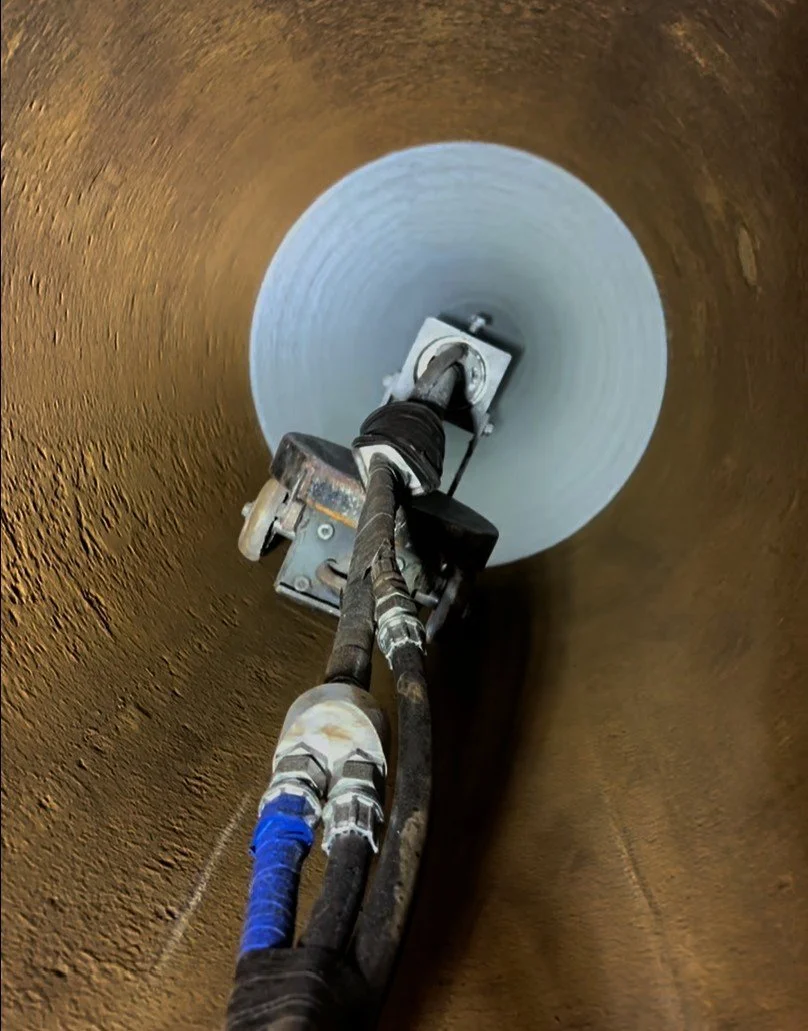
The approach used spray-in-place pipe (SIPP) technology, a trenchless method that cleans and coats the inside of existing pipes with a structural epoxy using robotic equipment. The pipe stays exactly where it is — behind the walls, in the risers, on the roof — and the work happens entirely from within the pipe itself.
Cleaning Without Water in an Occupied Building
One of the less obvious challenges in high-rise pipe rehabilitation is cleaning. On a buried water main, you can blast the interior with high-pressure water jets and pump the slurry out. Inside a 70-story occupied building, that’s not an option. Water jetting would risk uncontrolled flooding in wall cavities and mechanical spaces.
Instead, the pipes were cleaned using rotating chain assemblies fitted with carbide cutting bits, which mechanically removed the scaling and restored the original pipe diameter. Residual debris was then cleared with high-pressure rotating air nozzles powered by customized motors. CCTV inspection confirmed the surfaces were properly prepared before coating began.
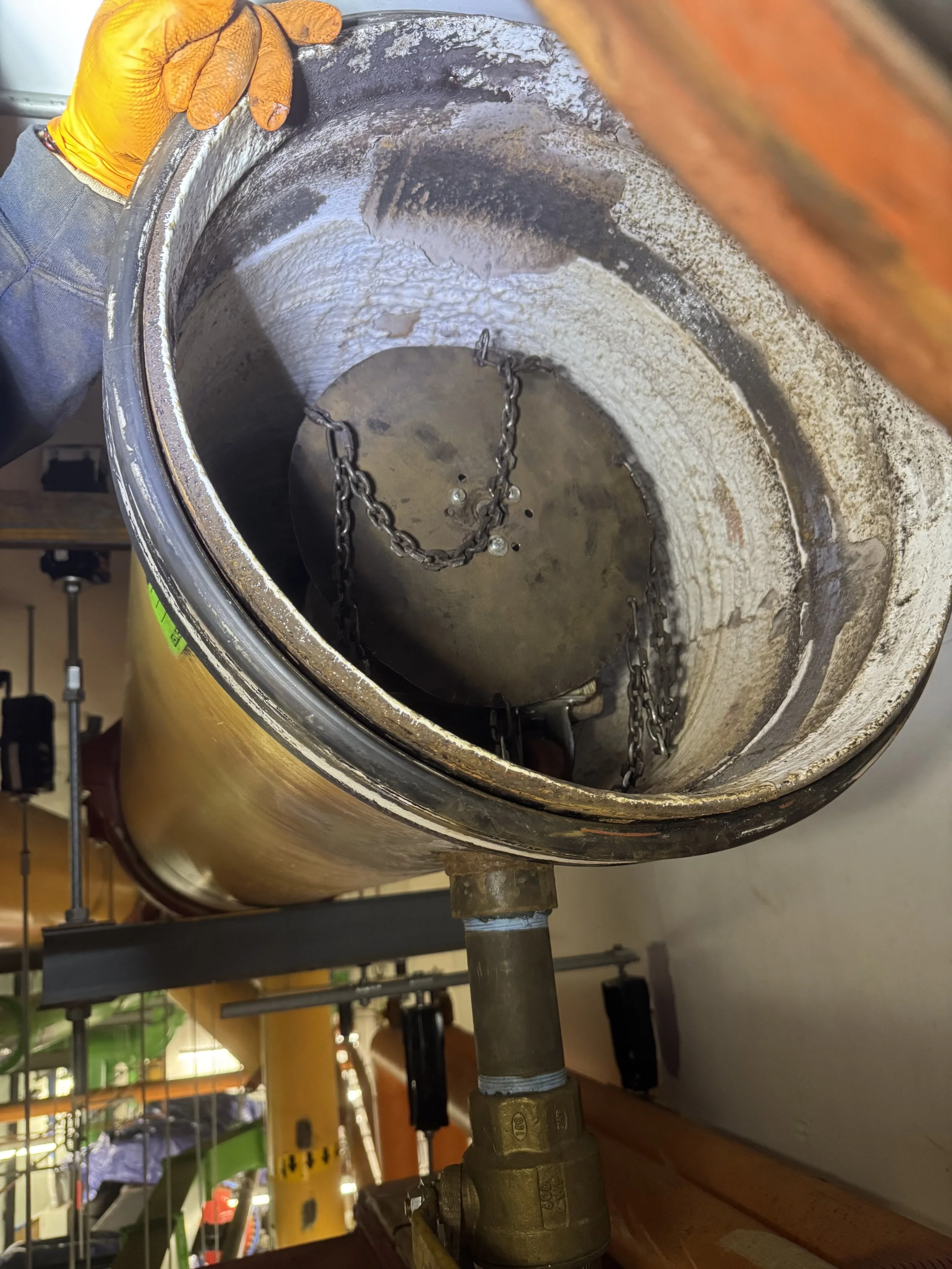
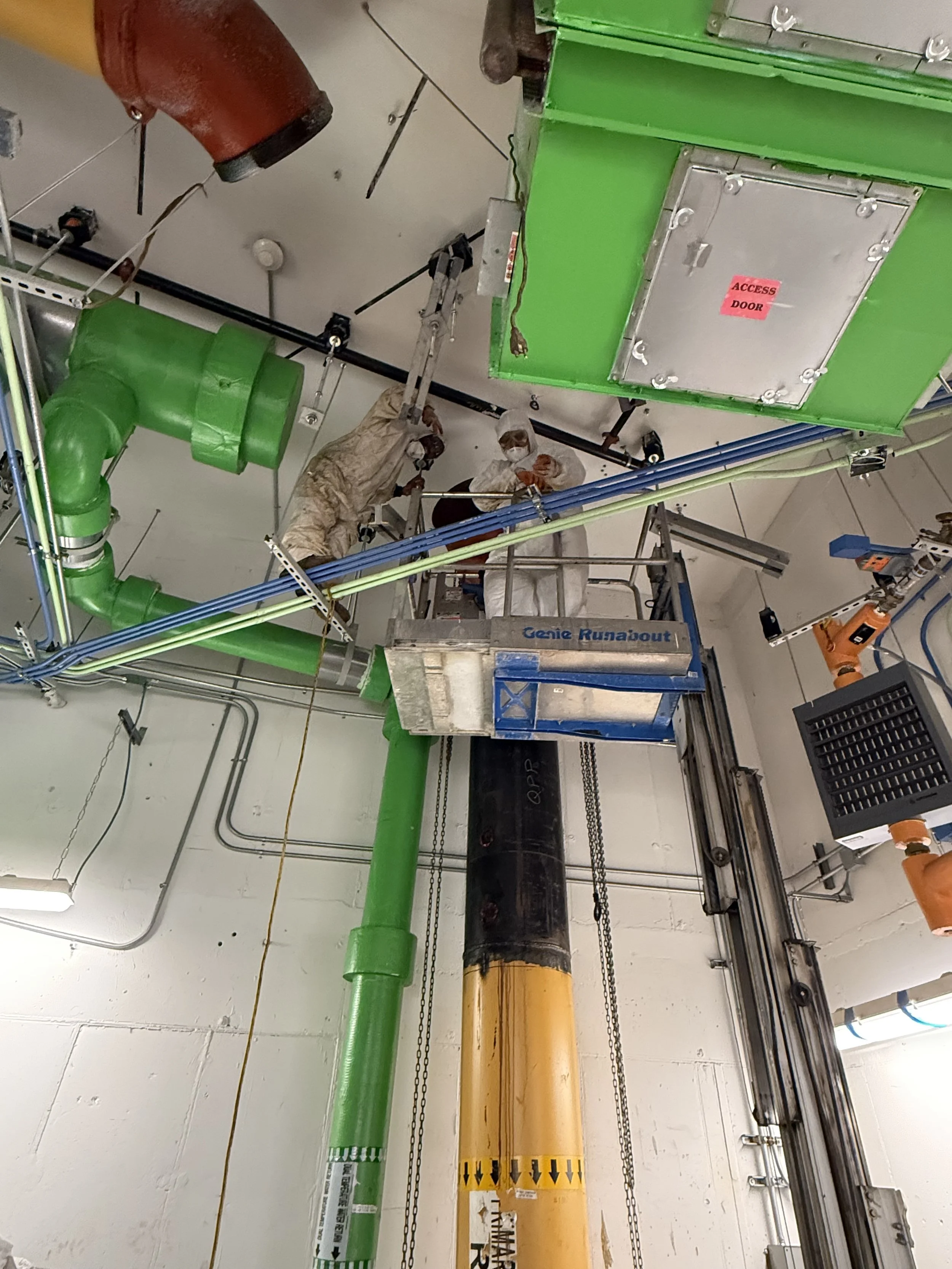
The mechanical room piping presented its own challenges. Horizontal pipes sat 15 feet above the floor, with multiple open vertical connections where pump legs had been removed for access. Crews used custom-designed skis to guide the cleaning and coating equipment through the piping while preventing it from falling through these openings.
Handling 350 PSI at the Base of a 70-Story Riser
There’s a detail about high-rise condenser water systems that makes rehabilitation more demanding than it might appear: pressure. With nearly 700 feet of vertical water column above the lowest mechanical room, static pressures are substantial even when the system is idle. Under operating conditions, pressures can approach 350 PSI.
This isn’t just a plumbing concern — it determines what rehabilitation method can actually work. Any coating that separates from the pipe wall under pressure will fail. The Warren Environmental epoxy system used on this project is rated to 400 PSI and bonds directly to the host pipe wall, forming a monolithic thermoset coating that cannot be softened by heat or water exposure. Unlike liner-based methods where water can get behind the material, the epoxy becomes part of the pipe itself.
2,000 Feet Rehabilitated in Eight Weeks
By the end of February, the entire system was rehabilitated and returned to service — well before the start of the cooling season. More than 2,000 feet of steel condenser water piping had been cleaned, inspected, and coated with a structural epoxy that carries a 75-year engineered life.
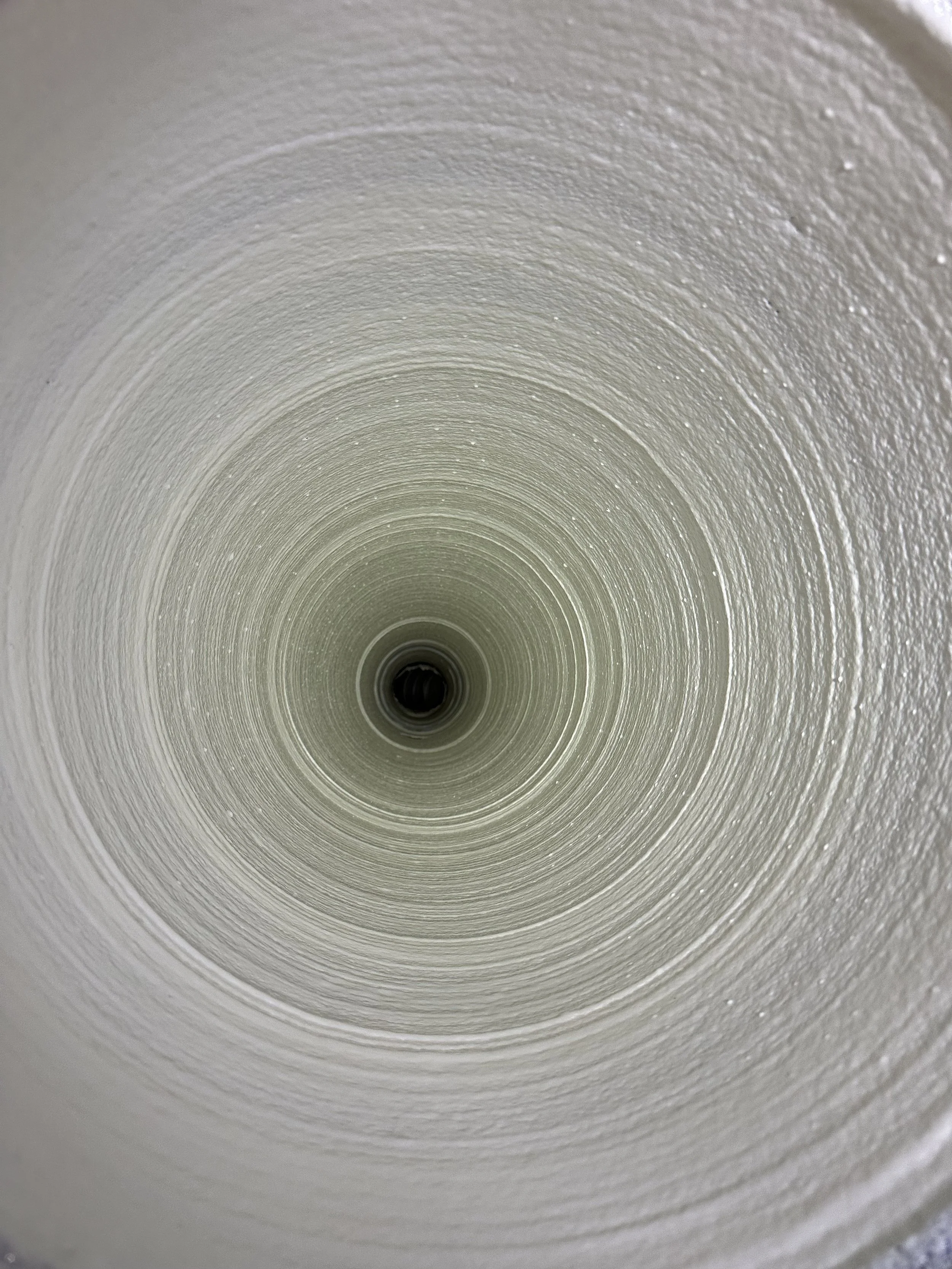
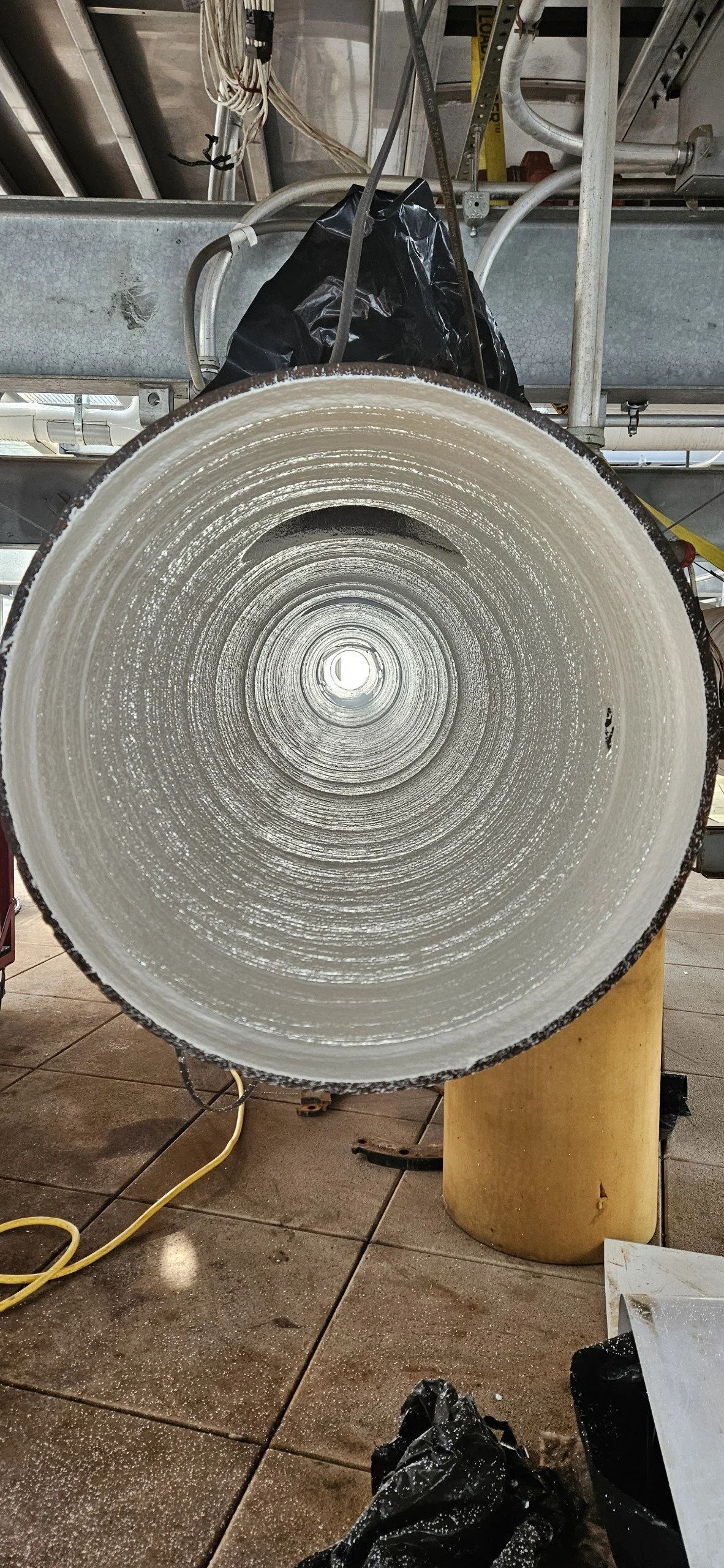
The results went beyond just stopping leaks. Full hydraulic efficiency was restored to the system, reducing pump strain and lowering energy consumption. The tuberculation that had been choking flow for years was completely removed, and the epoxy coating ensures it will never return. Over 900 tenants continued their daily lives without interruption — most of them never knowing the work happened at all.
What High-Rise Building Owners Should Know
Condenser water riser deterioration is one of the most common and most dreaded infrastructure problems in large residential and commercial buildings. The pipes are critical to the building’s cooling system, but they’re installed in locations that make replacement extraordinarily expensive and disruptive. Many building owners defer the problem for years, accepting rising maintenance costs and declining system performance because the alternative — a full riser replacement — seems unbearable.
Trenchless SIPP rehabilitation changes that calculus. When 2,000 feet of pipe in a 70-story building can be rehabilitated from three access points in eight weeks, without entering a single apartment, the comparison to replacement isn’t even close. The building gets a structurally enhanced piping system with a 75-year life expectancy, restored flow capacity, and eliminated corrosion — at a fraction of the cost and disruption.
If your building’s condenser water system is showing signs of deterioration — sediment in strainers, pinhole leaks, declining cooling performance — it’s worth understanding the options before the problem gets worse.
Project Summary
Facility
70+ story residential high-rise
Location
New York City, NY
Client
Prominent NYC real estate developer
Pipe System
2,000 ft of steel condenser water risers and ancillary piping (20" diameter)
Challenge
Corroded risers behind walls in 900 occupied apartments, 350 PSI operating pressure, winter-only work window
Solution
SIPP epoxy rehabilitation from 3 access points (roof, 44th floor, 14th floor) using Warren Environmental coatings
Cleaning Method
Rotating chain assemblies with carbide bits and high-pressure air (no water jetting)
Timeline
8 weeks, completed before cooling season
Year
2026
Is your building’s condenser water system showing signs of deterioration? Contact Spray In Place Solutions for a system assessment. We work with building owners, property managers, and engineers throughout the Northeast and nationwide.