
The Levee Pipes Nobody Would Fix — How Massillon, Ohio Solved a Two-Year Problem
For two years, the City of Massillon, Ohio tried to find someone who could fix the outlet pipes in its levee system. For two years, nobody said yes.
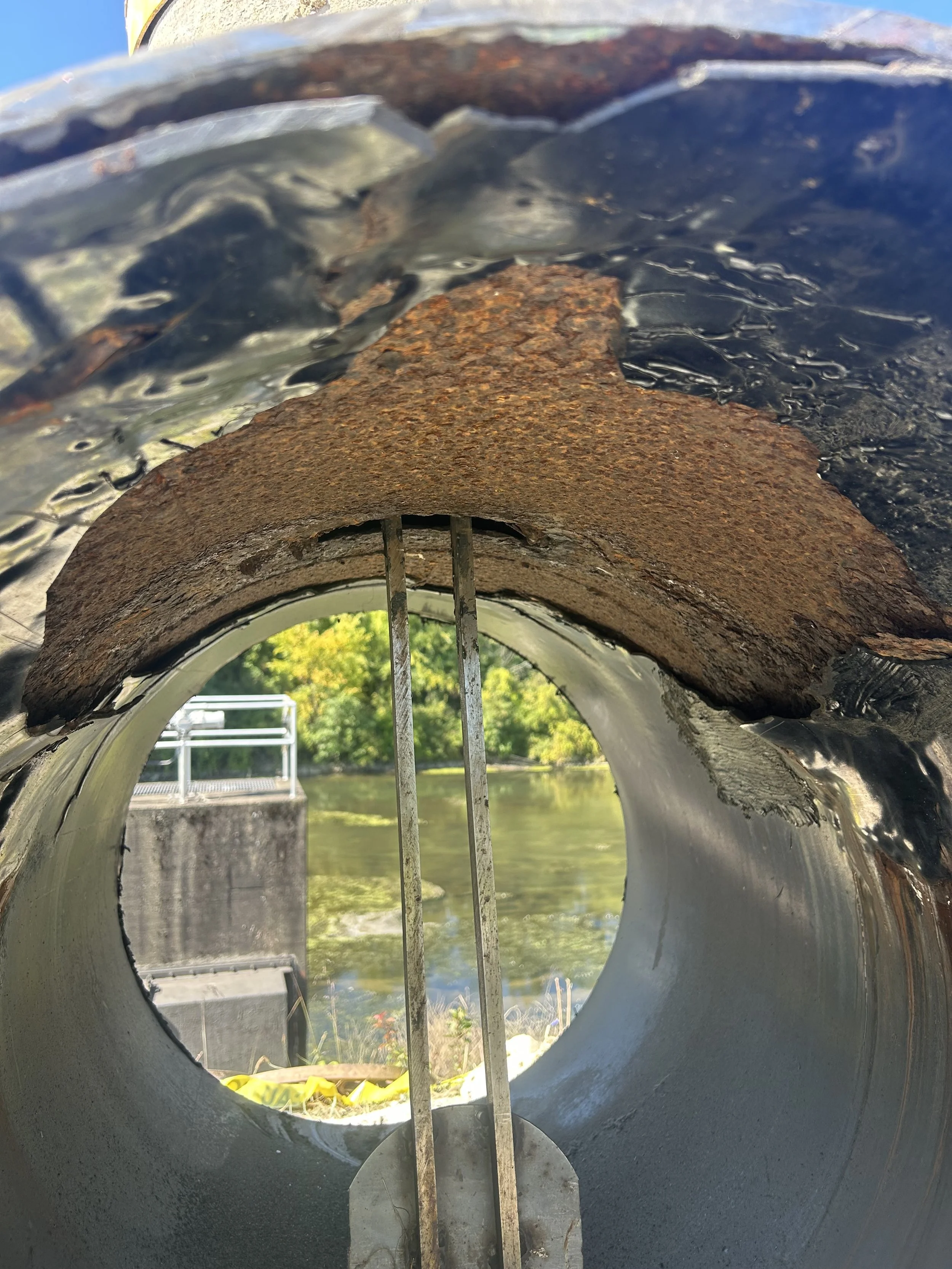
The levee, built in 1951 along the Tuscarawas River, protects roughly 630 acres of the city — including much of downtown — from flooding. The U.S. Army Corps of Engineers oversees the levee itself, while the city owns the pumping stations that push floodwaters back into the river. The system includes 24-inch and 30-inch circular steel outlet pipes, each with 45-degree bends, that terminate underwater on the river side with access available from only one end.
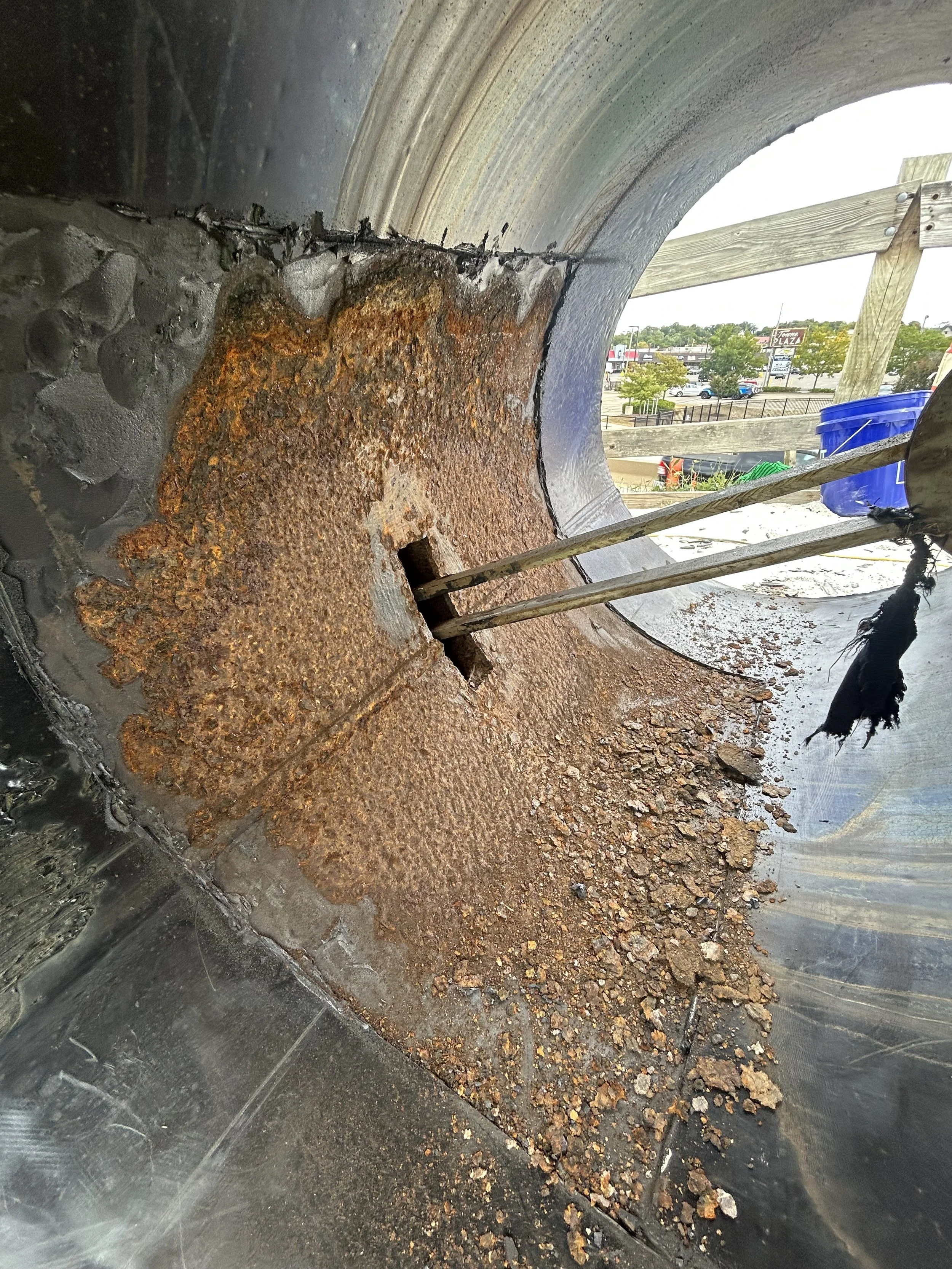
Inspections had revealed separated joints, internal corrosion, and failed sections of an older tar-based liner. To comply with the Clean Water Act and prevent pollutants from entering the city’s storm sewer system, repairs were essential. But the pipe geometry — 45-degree bends, single-end access, underwater terminations — made this a job that conventional rehabilitation methods couldn’t handle.
Why CIPP Companies Turned It Down
Cured-in-place pipe (CIPP) lining is one of the most widely used trenchless rehabilitation methods, and the city’s engineering firm, OHM Advisors, initially pursued that route. But CIPP has inherent limitations. The liner is pulled or inverted through the pipe as a continuous tube, then cured in place — which means it needs to travel through every bend and transition in a single pass. In pipes with 45-degree bends, that’s difficult. In pipes with single-end access and underwater terminations, it becomes impractical.
Company after company evaluated the job and declined. The geometry was too complex. The access was too limited. The risk was too high. By the fall of 2025, the city had been searching for a willing contractor for two years.
This is a scenario that municipal engineers encounter more often than most people realize. Not every pipe runs in a straight line with convenient access at both ends. When the geometry gets complex, the list of viable rehabilitation options gets very short.
A Different Technology for a Different Kind of Problem
OHM Advisors found Spray In Place Solutions through Warren Environmental, the epoxy manufacturer. After discussions about SIPP rehabilitation — how it works, what geometries it can handle, and the team’s track record as the leading applicator of Warren’s coatings — the decision was made to move forward.
Unlike CIPP, spray-in-place pipe (SIPP) technology doesn’t require pulling a liner through the entire pipe in one shot. A robotic spray head applies epoxy coating directly to the pipe wall from within, following the pipe’s geometry — bends, transitions, and all. Single-end access is workable because the equipment enters and exits from the same point. The epoxy bonds directly to the host pipe, forming a monolithic structural coating.
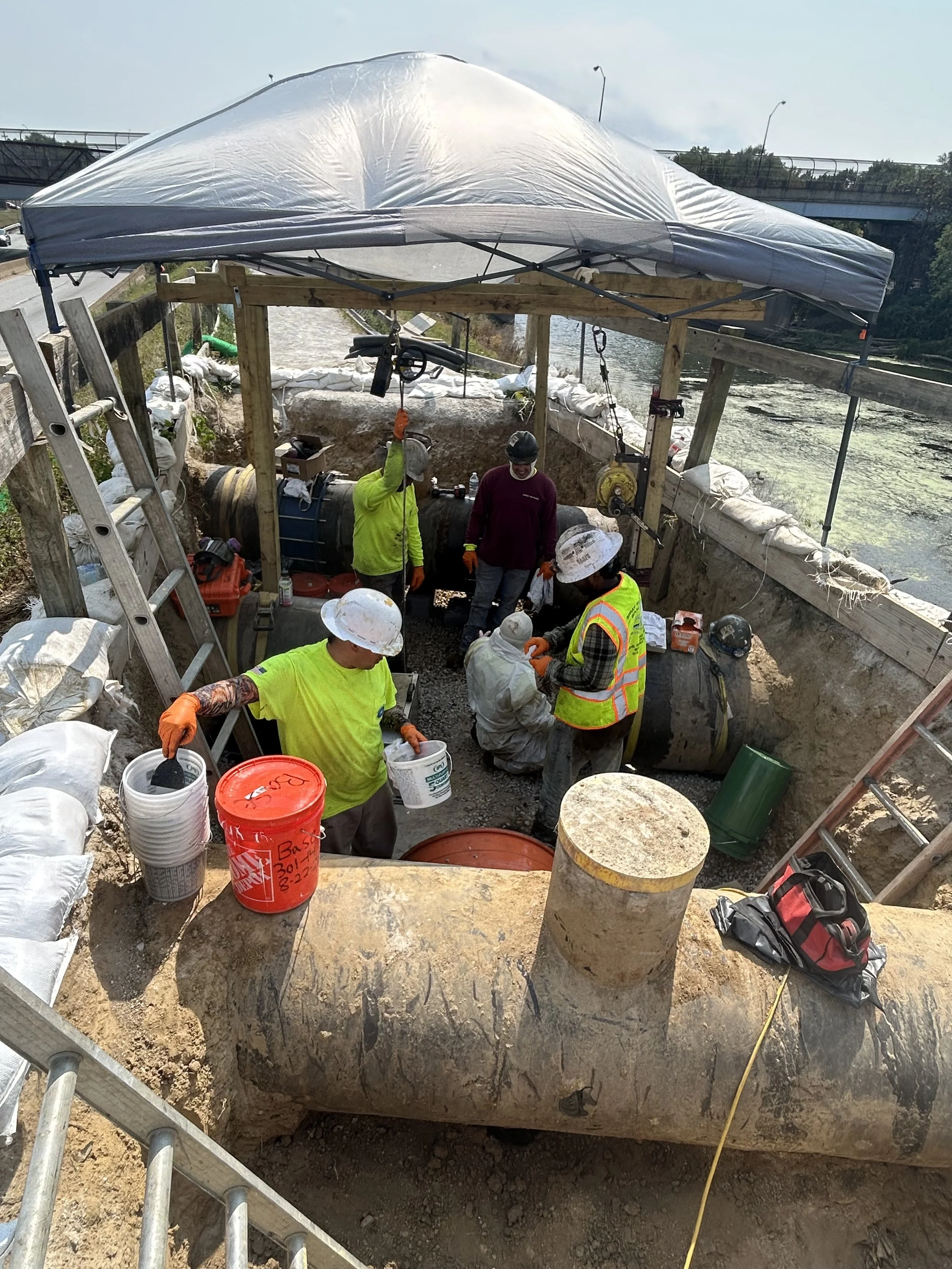
Spray In Place Solutions was paired with Nerone and Sons – Specialized Contracting as the general contractor. Nerone handled access, pipe cuts, traffic control, and reinstatement while the SIPP crew focused on cleaning and coating.
The Surprise Inside the Pipe
When the crew mobilized and inspected the site conditions, they found an unexpected problem. The old deteriorated liner inside the pipes wasn’t just any coating — it was tar.
This mattered because Warren Environmental’s epoxy cures through an exothermic chemical reaction that generates temperatures up to 300 degrees Fahrenheit. At those temperatures, tar melts. If the epoxy were spin-cast over the tar in the standard way, the heat of the curing process would liquefy the tar beneath it, preventing the epoxy from properly bonding to the pipe wall. The coating would fail.
This wasn’t a theoretical concern. Spray In Place Solutions had encountered tar coatings on previous projects and knew from direct experience that spraying epoxy over tar doesn’t work. The original rehabilitation plan needed to change — with the crew already on site.
Adapting the Approach on Site
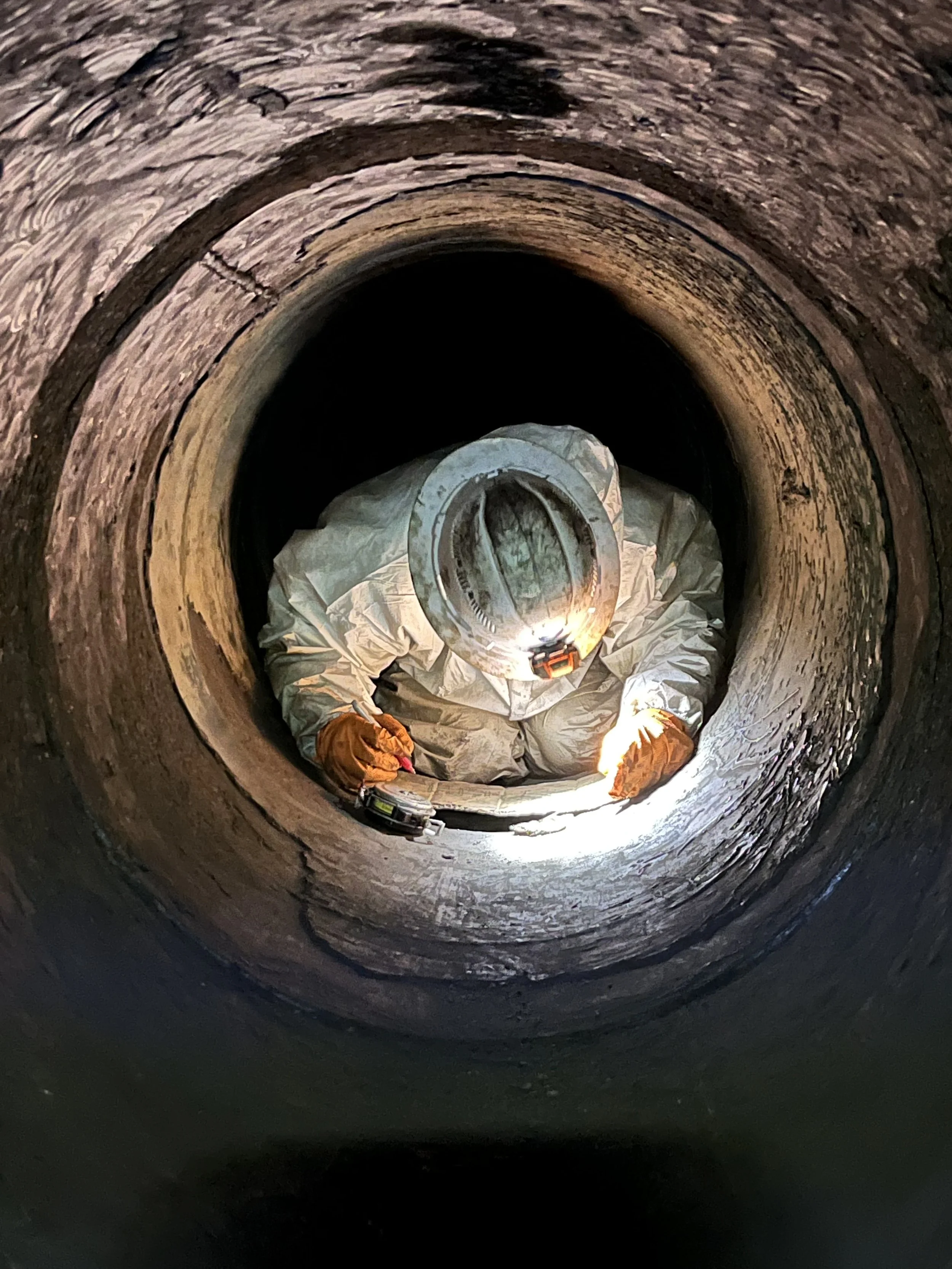
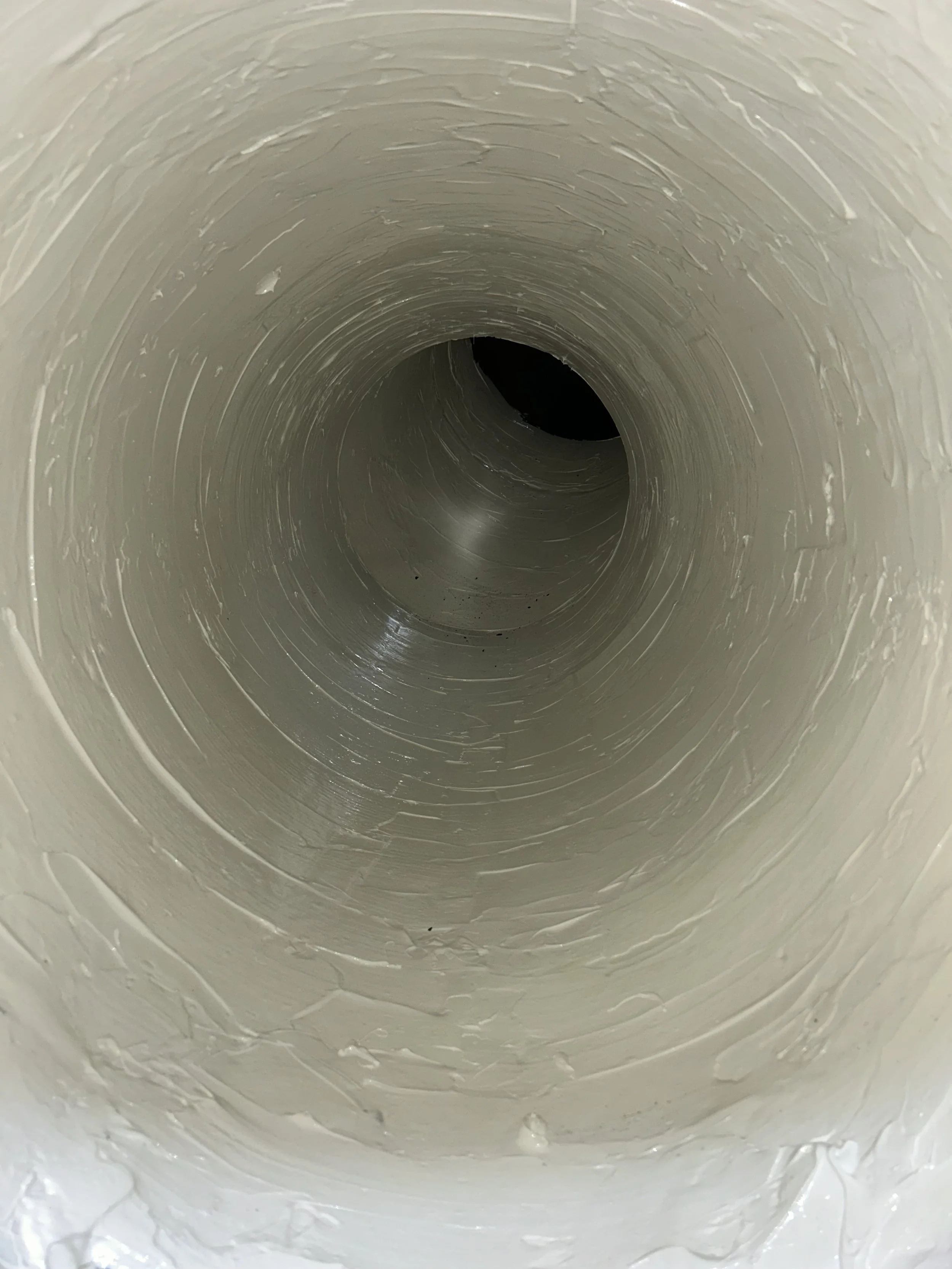
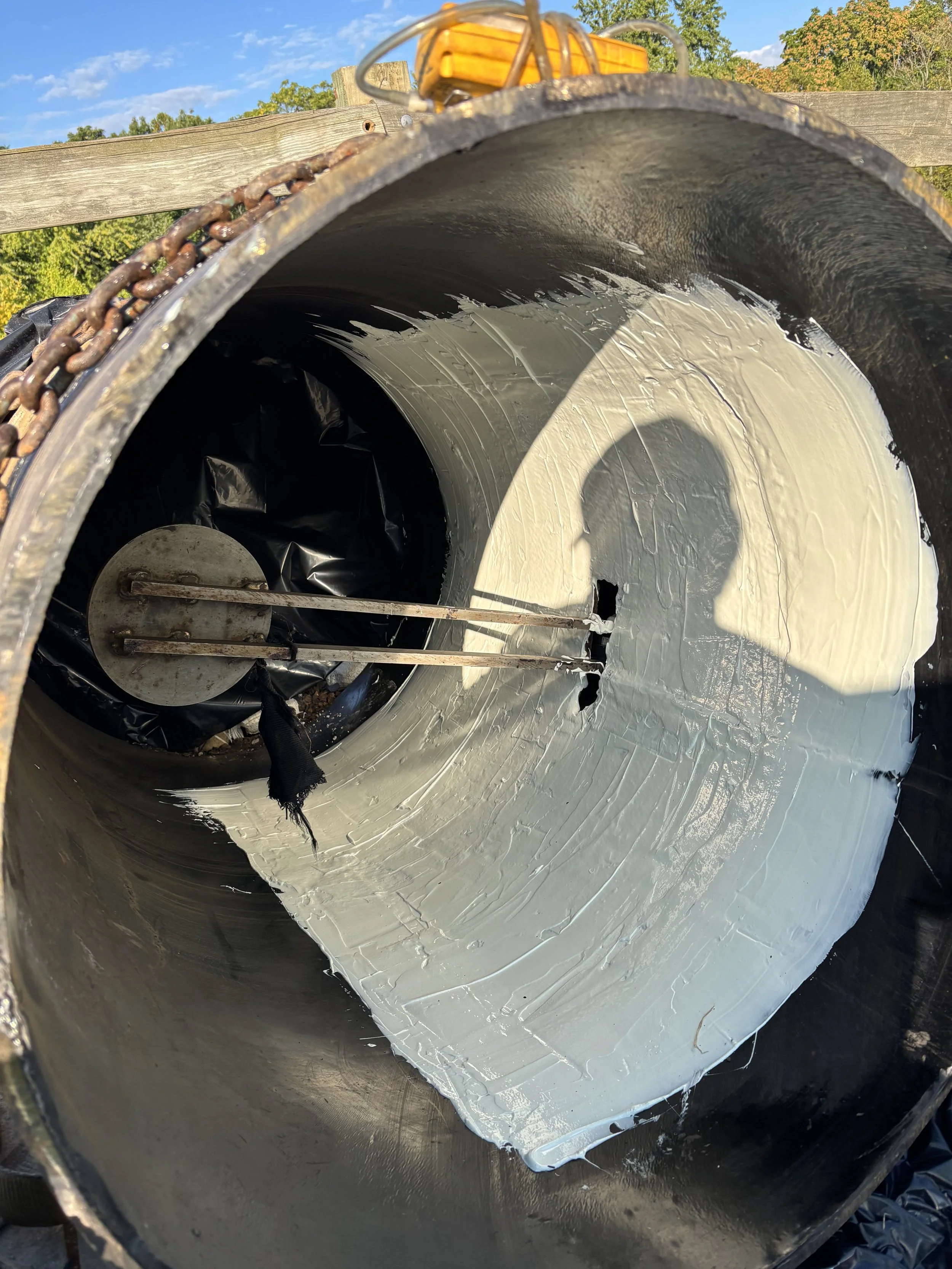
The team went back to the drawing board and developed a revised plan. First, they cleaned away all of the old, damaged tar, leaving undisturbed only the sections of tar that were still intact and well-adhered. Then, instead of using the robotic spin-casting equipment to apply the epoxy, the exposed pipe sections and separated joints were rehabilitated by hand-troweling Warren Environmental’s epoxy directly onto the surfaces that needed repair.
This hybrid approach — selective removal of failed coating, preservation of intact areas, and targeted hand application of structural epoxy — wasn’t in the original scope. It was developed in the field, based on the crew’s years of experience working with these materials in unpredictable conditions. The depth of that experience is what made the pivot possible. A less experienced team, encountering the tar for the first time, would have been stuck.
All of the work was accomplished from the top of the levee with minimal traffic disruption, at a fraction of the cost of pipe replacement — which had never been seriously considered due to the prohibitive expense and the impossibility of excavating through a levee structure overseen by the Army Corps of Engineers.
When the Standard Approach Doesn’t Fit
The Massillon project illustrates something important about pipe rehabilitation: the hardest problems aren’t always the biggest pipes or the longest runs. They’re the ones with constraints that don’t fit neatly into a standard method. A 45-degree bend. Single-end access. An old tar coating that nobody knew about until the pipe was open. A levee you can’t excavate through.
These are the projects that get deferred for years — not because the municipality doesn’t care, but because the conventional solutions don’t work and nobody has offered an alternative. Massillon spent two years looking. When they finally found a team with the right technology and enough field experience to adapt when things went sideways, the problem got solved.
If your municipality is sitting on a pipe rehabilitation project that contractors have turned down, it’s worth exploring whether SIPP technology can handle what CIPP can’t.
Project Summary
Facility
Tuscarawas River levee system and pumping stations
Location
Massillon, Ohio
Client
City of Massillon
General Contractor
Nerone and Sons – Specialized Contracting
Pipe System
24" and 30" circular steel low-pressure outlet pipes with 45-degree bends
Challenge
Complex geometry, single-end access, underwater terminations, failed tar coating incompatible with standard epoxy application, 2 years without a willing contractor
Solution
Selective tar removal and hand-troweled Warren Environmental epoxy on exposed sections and joints
Year
2025
Have a pipe rehabilitation project that other contractors have turned down? Contact Spray In Place Solutions to discuss whether SIPP technology can solve it. We’ve worked in 27 states on projects that others couldn’t — or wouldn’t — take on.
Rehabilitating Condenser Water Risers in a 70-Story Occupied Building — Without Entering a Single Apartment
In high-rise buildings, the condenser water system is invisible until it fails. The risers run vertically through the core of the building, buried behind walls, passing through every floor. When those pipes start to corrode, the symptoms show up gradually — sediment collecting in pump strainers, pinhole leaks appearing in mechanical rooms, cooling efficiency slowly declining. By the time the problem is undeniable, the pipes have been deteriorating for years, and the fix is anything but simple.
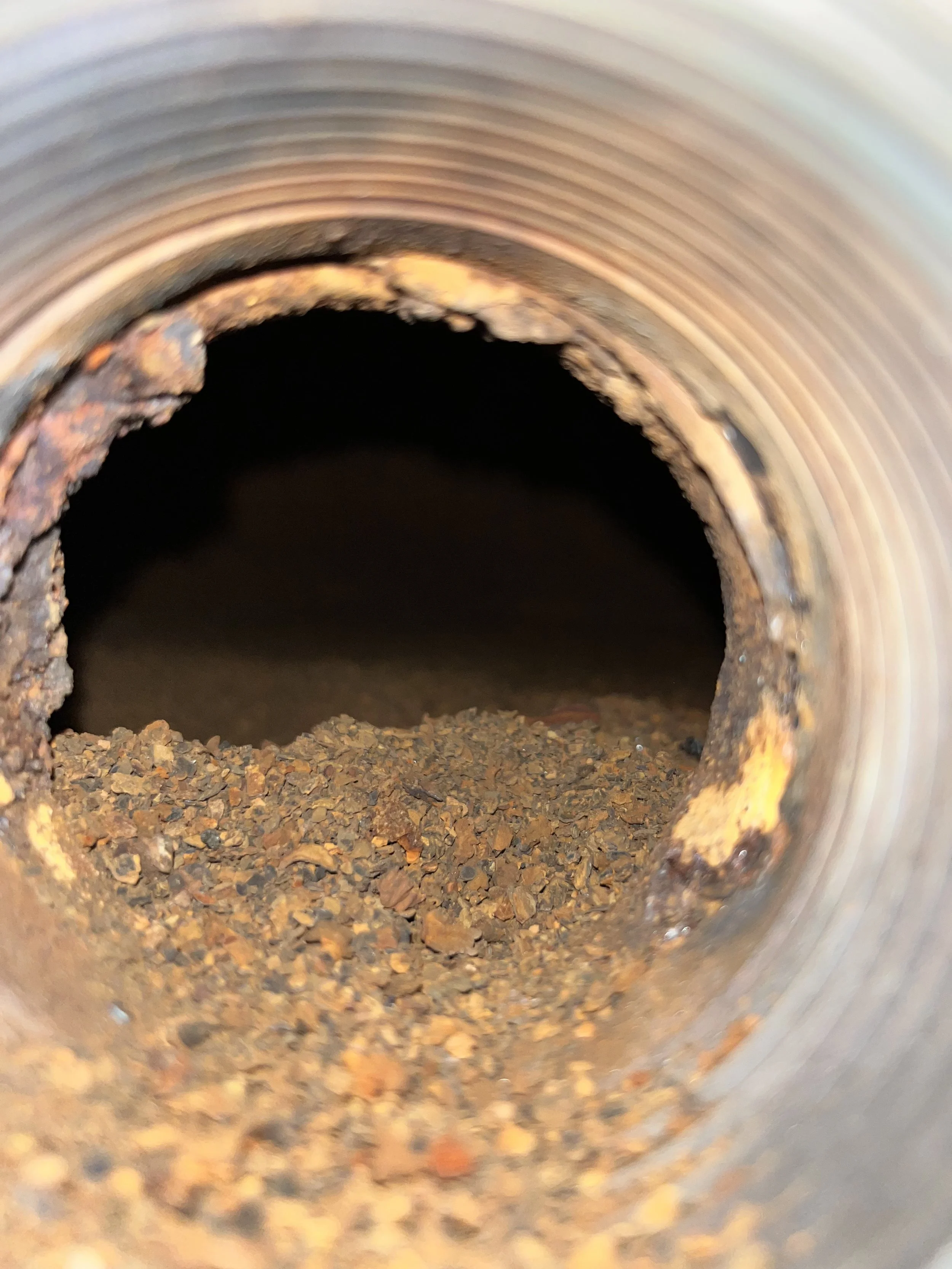
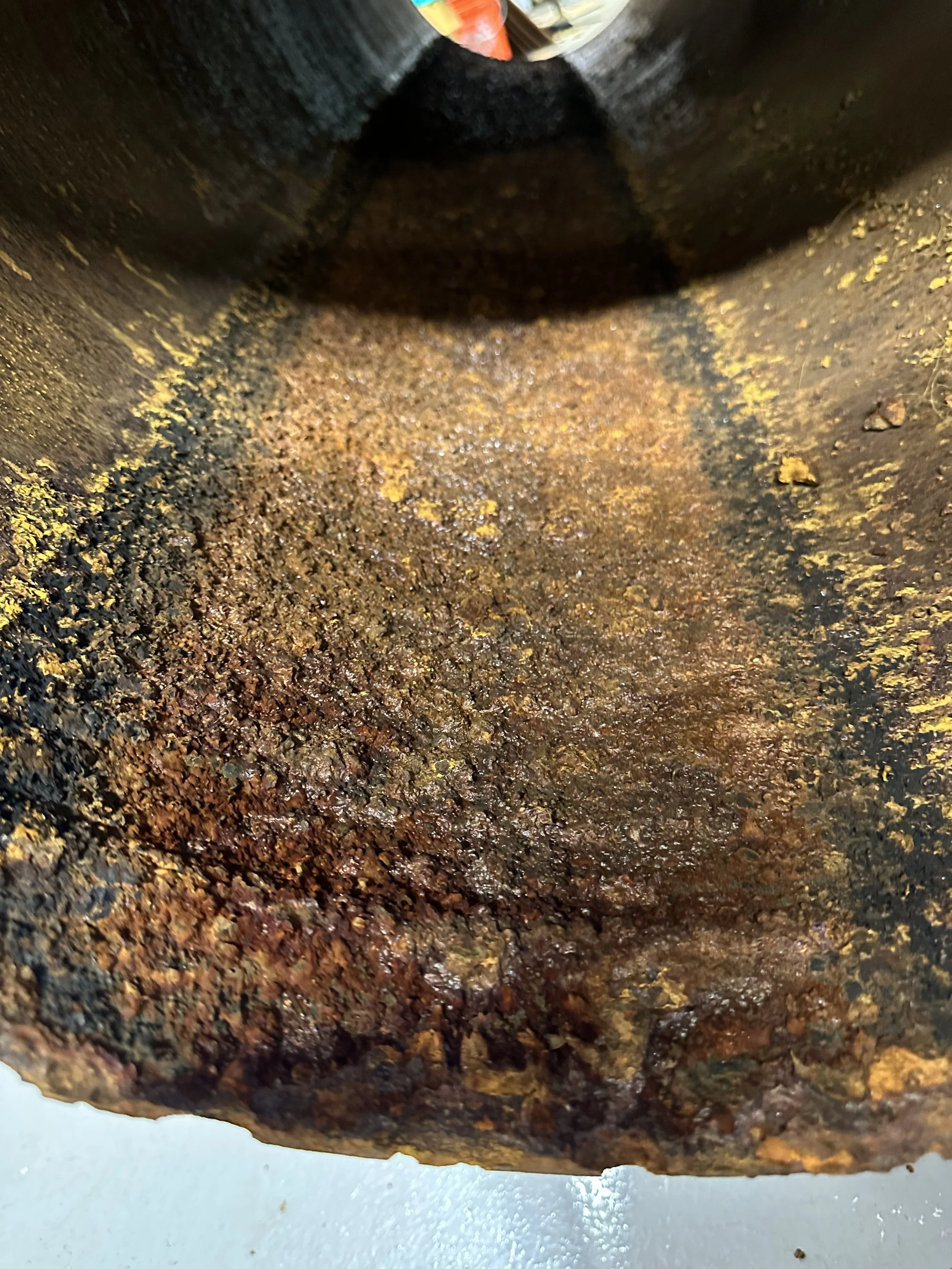
That’s exactly what happened at one of New York City’s largest residential high-rises — a building rising more than 70 stories with over 900 occupied apartments. The steel condenser water piping that served the entire air-conditioning system had reached a critical state. Tuberculation was choking flow, pinhole leaks were multiplying, and the building’s cooling system was under increasing strain. The system included approximately 2,000 feet of piping: two 700-foot vertical 20-inch steel risers, horizontal piping on the roof serving four cooling towers, and additional piping throughout the mechanical rooms.
The Replacement Problem
Building owners and property managers who’ve dealt with aging risers know this dilemma. The pipes need to be fixed, but replacing them means opening walls inside occupied apartments on every floor of the building. In a 70-story tower, that’s not a maintenance project — it’s a construction project that disrupts hundreds of tenants for months, requires coordination with building management on every floor, generates enormous amounts of debris, and costs several times what the pipe rehabilitation itself would cost.
There was also a timing constraint. Condenser water systems can only be taken offline when the building doesn’t need air conditioning. In New York City, that window is roughly November through March. The entire rehabilitation had to be completed during the winter months and the system returned to service before the cooling season began.
For the building’s ownership, traditional replacement was simply not viable. They needed an approach that could rehabilitate 2,000 feet of piping without entering a single occupied apartment.
Three Access Points for an Entire Building
Spray In Place Solutions evaluated the system and determined that the entire 2,000-foot piping network could be rehabilitated from just three locations: the roof and two mechanical rooms on the 44th and 14th floors. No apartment entry required. No wall demolition. No tenant disruption.
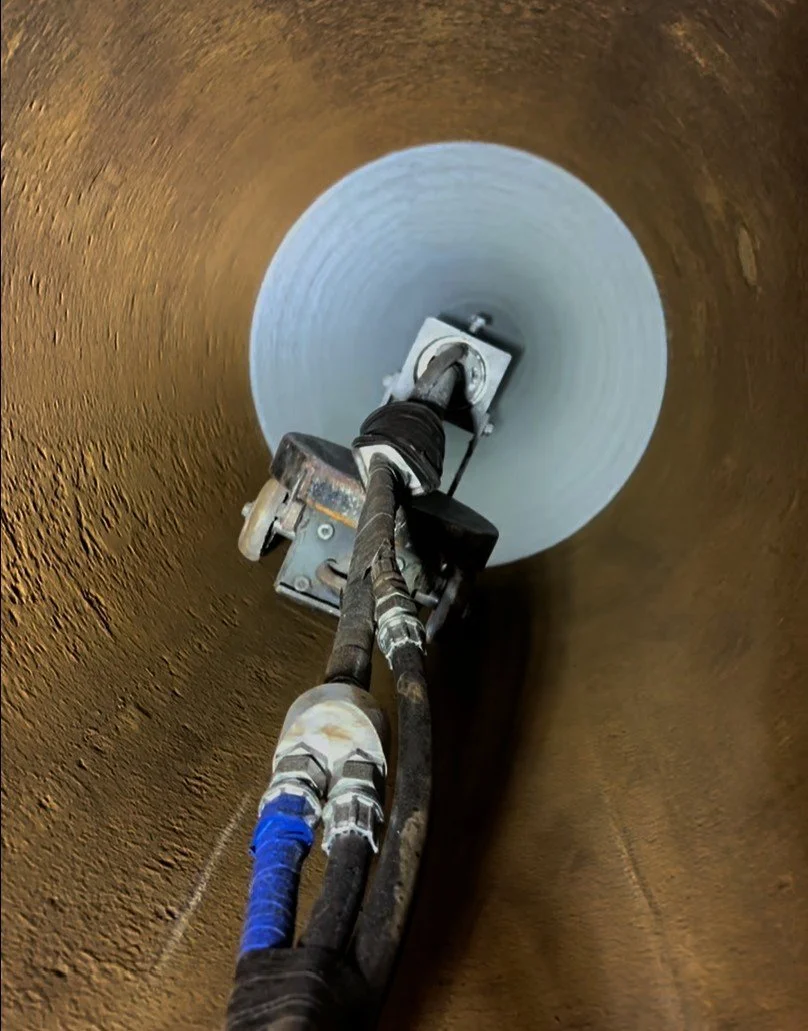
The approach used spray-in-place pipe (SIPP) technology, a trenchless method that cleans and coats the inside of existing pipes with a structural epoxy using robotic equipment. The pipe stays exactly where it is — behind the walls, in the risers, on the roof — and the work happens entirely from within the pipe itself.
Cleaning Without Water in an Occupied Building
One of the less obvious challenges in high-rise pipe rehabilitation is cleaning. On a buried water main, you can blast the interior with high-pressure water jets and pump the slurry out. Inside a 70-story occupied building, that’s not an option. Water jetting would risk uncontrolled flooding in wall cavities and mechanical spaces.
Instead, the pipes were cleaned using rotating chain assemblies fitted with carbide cutting bits, which mechanically removed the scaling and restored the original pipe diameter. Residual debris was then cleared with high-pressure rotating air nozzles powered by customized motors. CCTV inspection confirmed the surfaces were properly prepared before coating began.
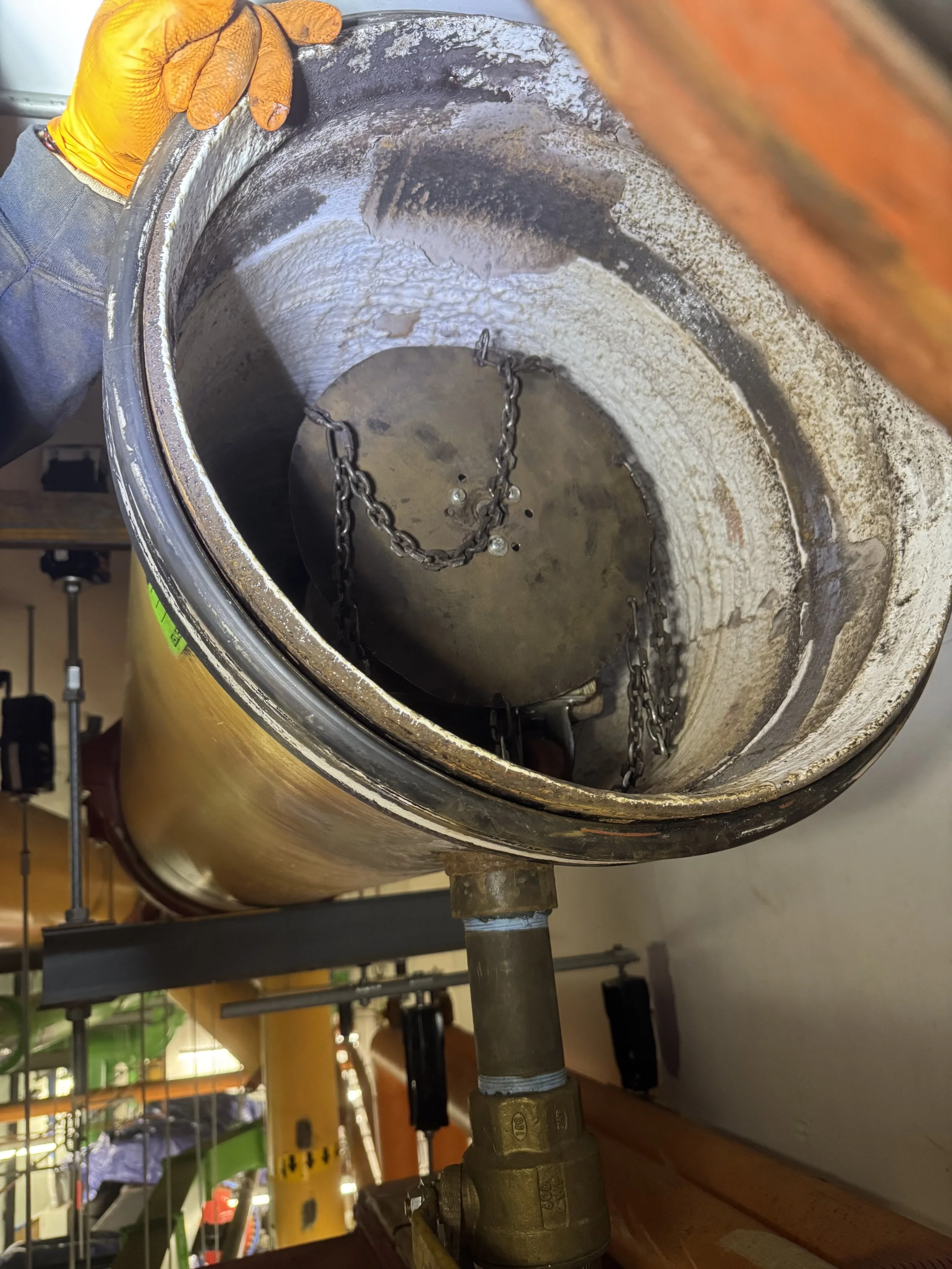
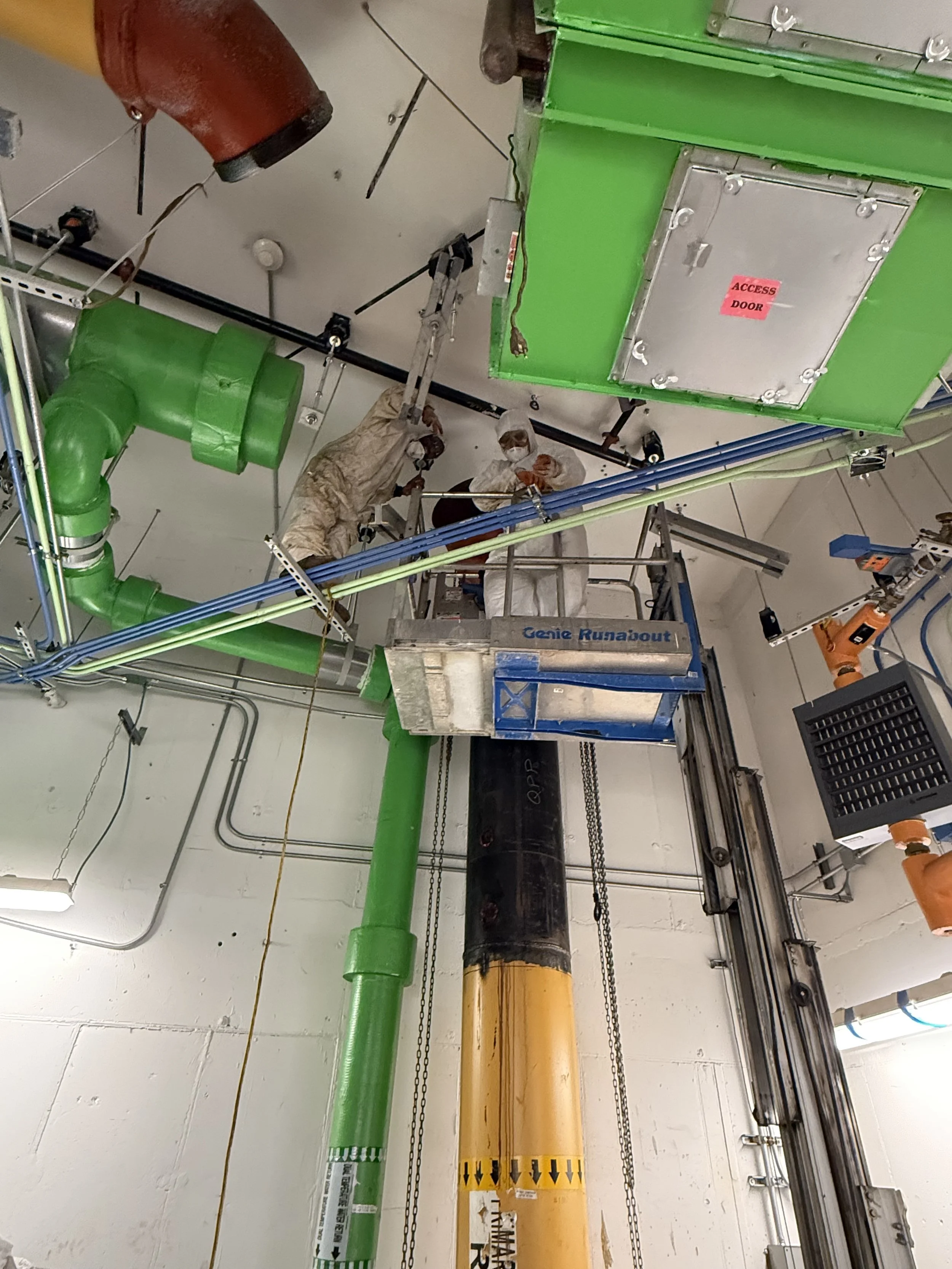
The mechanical room piping presented its own challenges. Horizontal pipes sat 15 feet above the floor, with multiple open vertical connections where pump legs had been removed for access. Crews used custom-designed skis to guide the cleaning and coating equipment through the piping while preventing it from falling through these openings.
Handling 350 PSI at the Base of a 70-Story Riser
There’s a detail about high-rise condenser water systems that makes rehabilitation more demanding than it might appear: pressure. With nearly 700 feet of vertical water column above the lowest mechanical room, static pressures are substantial even when the system is idle. Under operating conditions, pressures can approach 350 PSI.
This isn’t just a plumbing concern — it determines what rehabilitation method can actually work. Any coating that separates from the pipe wall under pressure will fail. The Warren Environmental epoxy system used on this project is rated to 400 PSI and bonds directly to the host pipe wall, forming a monolithic thermoset coating that cannot be softened by heat or water exposure. Unlike liner-based methods where water can get behind the material, the epoxy becomes part of the pipe itself.
2,000 Feet Rehabilitated in Eight Weeks
By the end of February, the entire system was rehabilitated and returned to service — well before the start of the cooling season. More than 2,000 feet of steel condenser water piping had been cleaned, inspected, and coated with a structural epoxy that carries a 75-year engineered life.
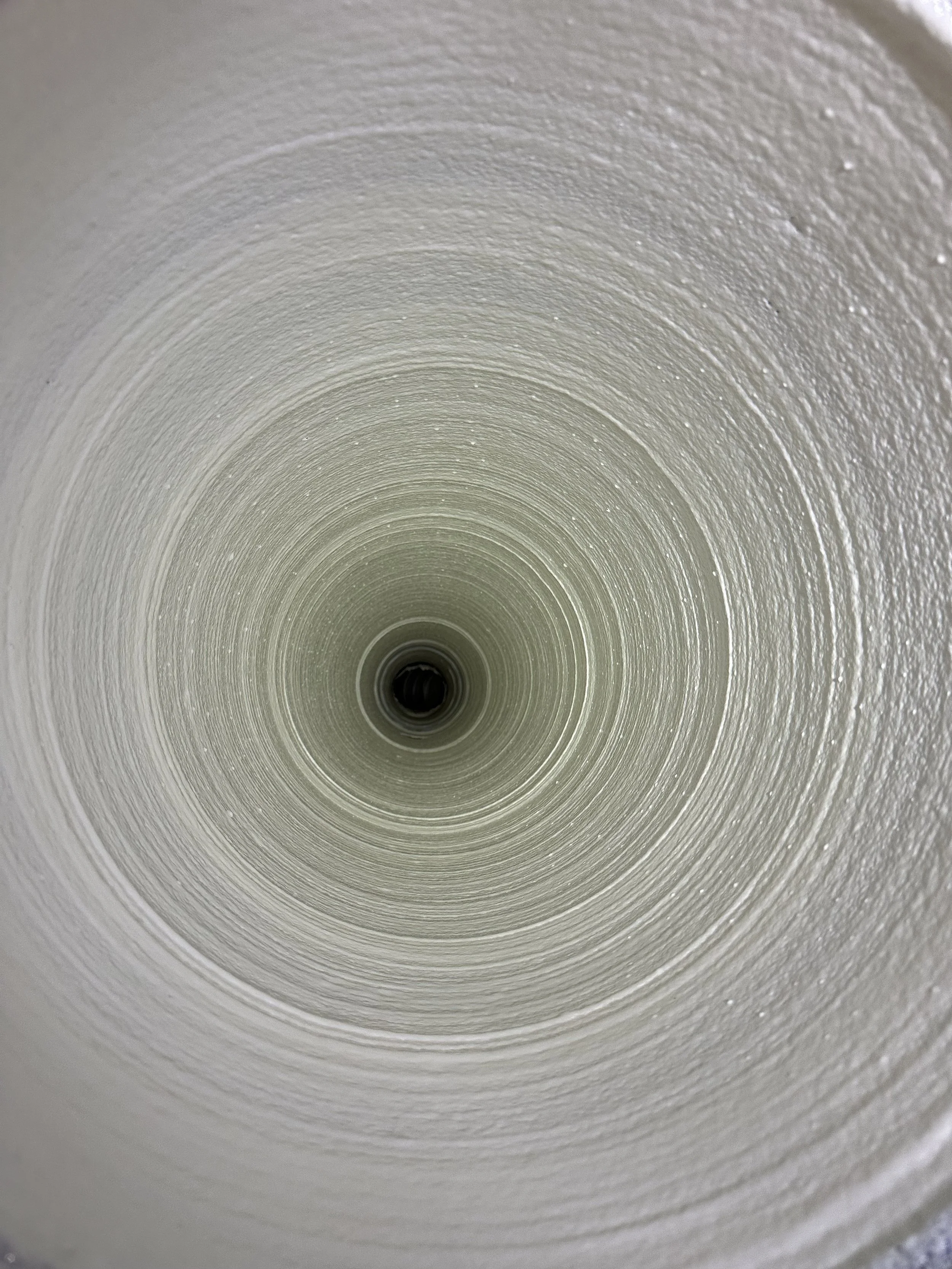
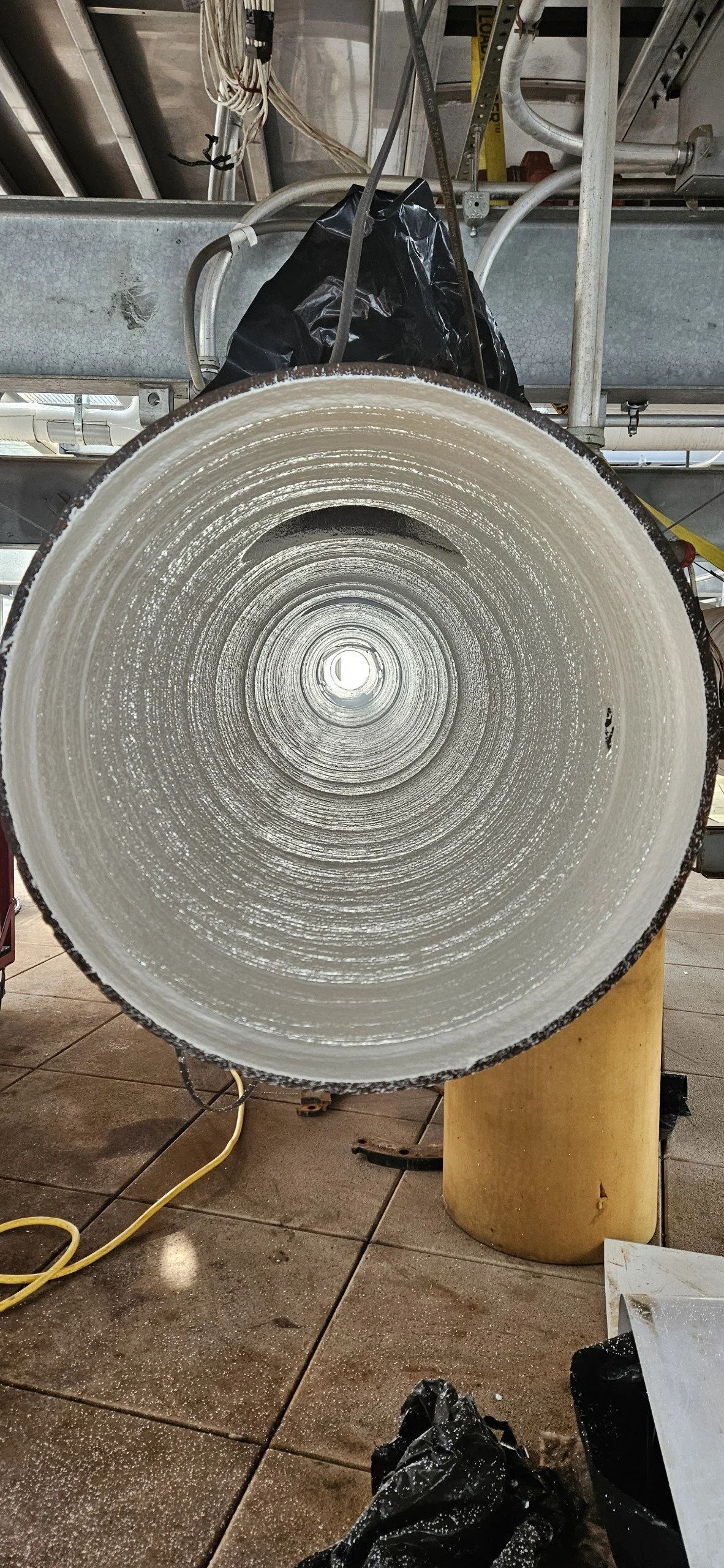
The results went beyond just stopping leaks. Full hydraulic efficiency was restored to the system, reducing pump strain and lowering energy consumption. The tuberculation that had been choking flow for years was completely removed, and the epoxy coating ensures it will never return. Over 900 tenants continued their daily lives without interruption — most of them never knowing the work happened at all.
What High-Rise Building Owners Should Know
Condenser water riser deterioration is one of the most common and most dreaded infrastructure problems in large residential and commercial buildings. The pipes are critical to the building’s cooling system, but they’re installed in locations that make replacement extraordinarily expensive and disruptive. Many building owners defer the problem for years, accepting rising maintenance costs and declining system performance because the alternative — a full riser replacement — seems unbearable.
Trenchless SIPP rehabilitation changes that calculus. When 2,000 feet of pipe in a 70-story building can be rehabilitated from three access points in eight weeks, without entering a single apartment, the comparison to replacement isn’t even close. The building gets a structurally enhanced piping system with a 75-year life expectancy, restored flow capacity, and eliminated corrosion — at a fraction of the cost and disruption.
If your building’s condenser water system is showing signs of deterioration — sediment in strainers, pinhole leaks, declining cooling performance — it’s worth understanding the options before the problem gets worse.
Project Summary
Facility
70+ story residential high-rise
Location
New York City, NY
Client
Prominent NYC real estate developer
Pipe System
2,000 ft of steel condenser water risers and ancillary piping (20" diameter)
Challenge
Corroded risers behind walls in 900 occupied apartments, 350 PSI operating pressure, winter-only work window
Solution
SIPP epoxy rehabilitation from 3 access points (roof, 44th floor, 14th floor) using Warren Environmental coatings
Cleaning Method
Rotating chain assemblies with carbide bits and high-pressure air (no water jetting)
Timeline
8 weeks, completed before cooling season
Year
2026
Is your building’s condenser water system showing signs of deterioration? Contact Spray In Place Solutions for a system assessment. We work with building owners, property managers, and engineers throughout the Northeast and nationwide.